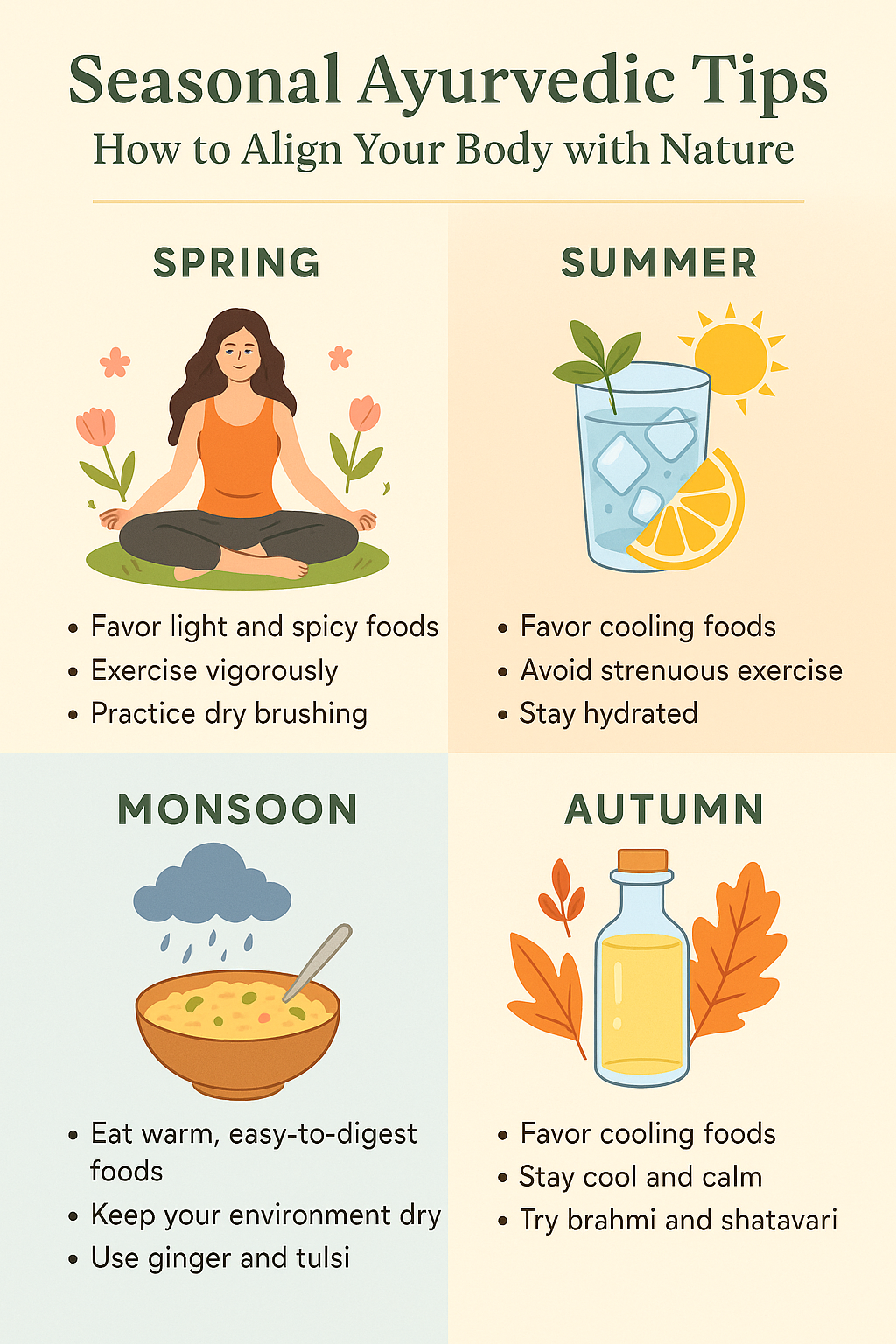
Ayurveda, the ancient Indian system of medicine, emphasizes harmony between the body and nature. One of the core principles of Ayurveda is Ritucharya — the seasonal routine. Just as the earth changes through the six seasons, our bodies also undergo physical and mental shifts. By adjusting our diet, lifestyle, and habits according to the seasons, we can maintain balance and avoid disease.
In this blog, we will explore essential Ayurvedic tips for each season to help you stay healthy, energetic, and in tune with nature.
🌸 Spring (Vasanta Ritu)
Nature’s Mood:
Spring is the season of renewal. The earth warms up, flowers bloom, and stored Kapha from winter begins to melt, causing heaviness, colds, allergies, and sluggishness.
Ayurvedic Tips:
- Diet: Favor light, spicy, bitter, and astringent foods like barley, lentils, leafy greens, and warm soups. Avoid dairy, sweets, and oily foods.
- Lifestyle: Wake up early, engage in invigorating exercise, and practice dry brushing (garshana) to reduce excess Kapha.
- Herbs: Use trikatu (dry ginger, black pepper, long pepper) and turmeric to boost digestion and immunity.
- Detox: This is the best time for Ayurvedic cleansing (Panchakarma) and fasting.
☀️ Summer (Grishma Ritu)
Nature’s Mood:
Summer brings heat, dryness, and energy depletion. The Pitta dosha becomes aggravated, leading to issues like acidity, skin rashes, anger, and dehydration.
Ayurvedic Tips:
- Diet: Favor cooling, sweet, and hydrating foods like cucumbers, watermelon, coconut water, mint, and milk. Avoid spicy, salty, and fermented foods.
- Lifestyle: Avoid strenuous exercise, sun exposure, and alcohol. Bathe in cool water and wear light cotton clothes.
- Herbs: Aloe vera, amla, and sandalwood help cool the system and calm the mind.
- Sleep: Daytime naps are allowed in summer to compensate for energy loss.
🍂 Monsoon (Varsha Ritu)
Nature’s Mood:
The rainy season causes weakened digestion and increased Vata-Kapha imbalance. Waterborne diseases, joint pains, and infections are common.
Ayurvedic Tips:
- Diet: Eat warm, easily digestible foods like khichdi, soups, and steamed vegetables. Avoid raw, cold, or oily foods.
- Lifestyle: Keep your environment dry and clean. Use neem oil or turmeric to avoid skin infections.
- Herbs: Ginger, tulsi (holy basil), black pepper, and cinnamon can prevent coughs and colds.
- Self-care: Regular oil massage with sesame oil can balance Vata and improve immunity.
🍁 Autumn (Sharad Ritu)
Nature’s Mood:
This is the post-monsoon period, when Pitta is high, and the weather is dry, bright, and cool. Skin problems, indigestion, and anger may flare up.
Ayurvedic Tips:
- Diet: Favor sweet, bitter, and astringent foods like pomegranate, amla, ghee, and green vegetables. Avoid hot and sour foods.
- Lifestyle: Stay cool and calm. Avoid direct sun and overworking.
- Herbs: Brahmi and Shatavari help reduce mental stress and pitta heat.
- Hydration: Drink lots of clean water and herbal teas to keep your system balanced.
❄️ Early Winter (Hemanta Ritu)
Nature’s Mood:
This is the time of strength and stability. The digestive fire (Agni) is strongest, and Vata starts to accumulate.
Ayurvedic Tips:
- Diet: Eat rich, nourishing, and warm foods like whole grains, dairy, nuts, and ghee. Avoid cold or leftover foods.
- Lifestyle: Wake up before sunrise, do oil massage with warm sesame oil, and exercise moderately.
- Herbs: Ashwagandha and guduchi can build strength and immunity.
- Clothing: Dress warmly to protect yourself from cold winds.
❄️ Late Winter (Shishira Ritu)
Nature’s Mood:
This is the coldest time of the year when Kapha begins to accumulate and Vata is still active.
Ayurvedic Tips:
- Diet: Continue heavy and warming foods. Spices like ginger, cinnamon, and cloves are great.
- Lifestyle: Keep your body warm, stay active, and avoid daytime naps.
- Self-care: Practice regular abhyanga (oil massage) and sun exposure when possible.
🌿 Universal Seasonal Ayurvedic Practices
Regardless of the season, Ayurveda recommends a few timeless practices:
- Mindful Eating – Eat according to your dosha and season, and always eat with awareness.
- Daily Routine (Dinacharya) – Wake up early, clean your senses (tongue scraping, oil pulling), and maintain regular mealtimes.
- Seasonal Detox – Consider gentle detox or Panchakarma in spring and fall.
- Yoga & Meditation – Adjust your yoga practice to the season (e.g., energizing in winter, calming in summer).
- Sleep Hygiene – Maintain regular sleep cycles and avoid staying up late.
🧘♀️ Final Thoughts
Aligning your lifestyle with the rhythms of nature is the essence of Ayurvedic living. By embracing Ritucharya, you support your immunity, digestion, mental clarity, and overall well-being throughout the year. It’s not about drastic changes but simple, seasonal shifts that keep your body and mind in balance.
So, observe the season, listen to your body, and apply these timeless Ayurvedic tips to live a life of health and harmony.