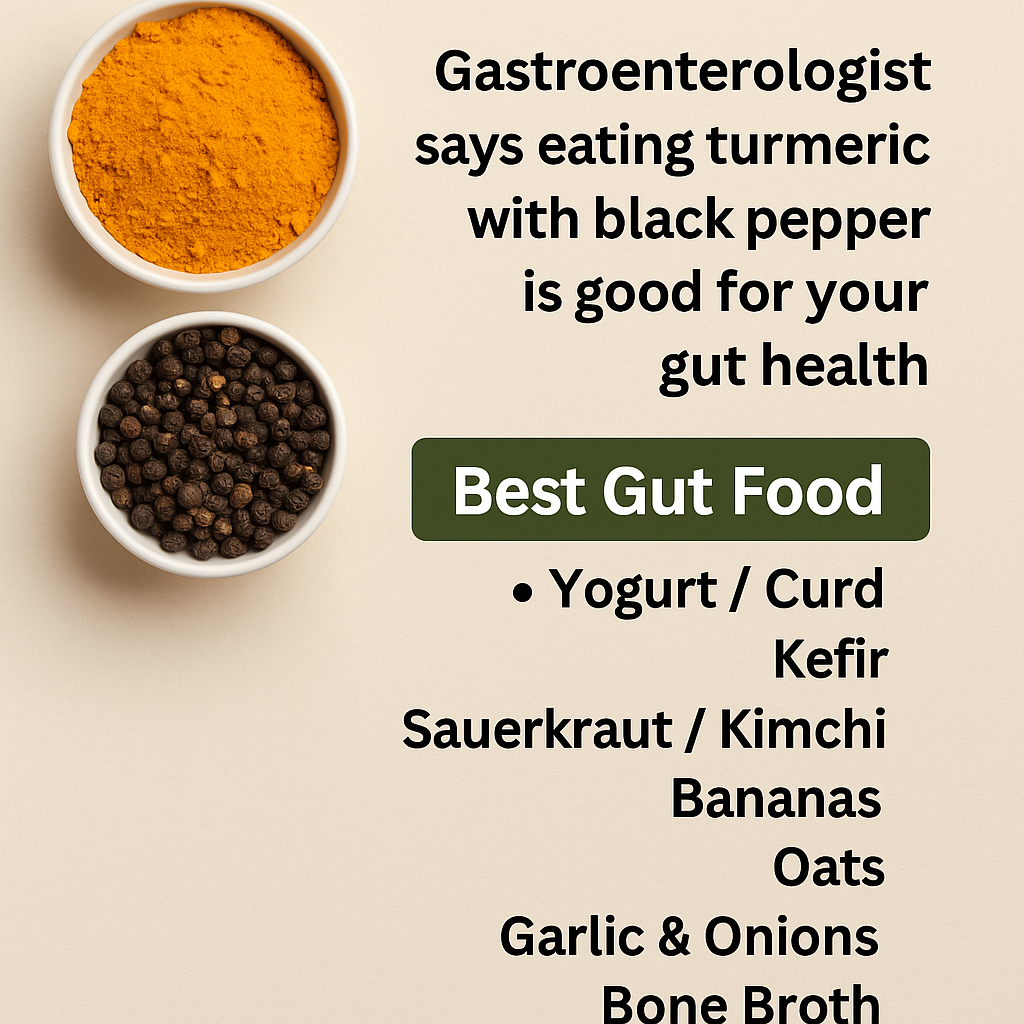
In recent years, interest in gut health has exploded. From probiotics to fermented foods, the wellness world is buzzing with gut-friendly trends. However, amidst all the hype, one simple and ancient combination stands out as a true game-changer: turmeric and black pepper. This age-old duo, recommended by modern gastroenterologists, has powerful effects on digestion, gut microbiota, and overall well-being.
In this blog post, we will explore:
- The science behind turmeric and black pepper for gut health
- Expert advice from gastroenterologists
- A comprehensive list of the best gut foods
- How to incorporate turmeric and pepper into your daily diet
- Natural gut care tips and lifestyle changes
- Who should be cautious and why
- FAQs and final thoughts
🧠 Understanding Gut Health: Why It Matters
Your gut isn’t just a digestive organ—it’s the control center for your entire health. Often referred to as the “second brain,” the gut plays a vital role in:
- Digesting and absorbing nutrients
- Supporting immune function
- Balancing hormones
- Managing mood and mental health (via the gut-brain axis)
- Eliminating toxins
An unhealthy gut can lead to bloating, constipation, food intolerance, fatigue, acne, anxiety, and even chronic diseases.
According to Dr. Rajeev Sharma, a renowned gastroenterologist in India:
“A balanced gut is essential for total body health. Lifestyle, stress, antibiotics, and poor diet can harm your gut bacteria. But simple natural solutions can restore balance — turmeric and black pepper is one of the most effective ones.”
🌱 Meet the Healing Duo: Turmeric + Black Pepper
✅ Turmeric – The Golden Healer
Turmeric (Curcuma longa) has been used for thousands of years in Ayurveda and Traditional Chinese Medicine. Its bright yellow compound curcumin is a powerful anti-inflammatory and antioxidant.
Benefits of Curcumin:
- Reduces gut inflammation
- Supports healthy digestion
- Repairs the gut lining
- Fights oxidative stress
- May help reduce symptoms of IBS, IBD, and leaky gut
However, curcumin is poorly absorbed in the bloodstream on its own. That’s where black pepper comes in.
✅ Black Pepper – The Bioavailability Booster
Black pepper contains piperine, which enhances the absorption of curcumin by up to 2000%.
Benefits of Piperine:
- Improves nutrient absorption
- Enhances curcumin’s effects
- Supports metabolism
- Reduces intestinal gas and bloating
Together, turmeric and black pepper form a gut-healing synergy that can significantly improve digestive health.
🧪 Scientific Evidence: What Research Says
Numerous studies support the gut health benefits of turmeric and black pepper:
🔹 A study in the Journal of Clinical Gastroenterology (2013) found that turmeric reduced abdominal pain and improved bowel movements in IBS patients.
🔹 Research published in Planta Medica (1998) showed that piperine significantly enhances curcumin absorption in humans and animals.
🔹 A 2020 study in Nutrients indicated that curcumin may reduce intestinal permeability (“leaky gut”), helping maintain the integrity of the gut lining.
🥗 Best Gut Foods Recommended by Gastroenterologists
While turmeric and black pepper are foundational, your gut thrives on a variety of nutrient-rich, natural foods. Here’s a curated list of the top gut-healing foods recommended by doctors:
1. Probiotic Foods – To introduce beneficial bacteria
- Yogurt (with live cultures)
- Kefir
- Sauerkraut
- Kimchi
- Miso
- Pickles (fermented in brine, not vinegar)
2. Prebiotic Foods – To feed the good bacteria
- Bananas
- Onions
- Garlic
- Leeks
- Asparagus
- Chicory root
- Apples
- Oats
3. Anti-inflammatory Foods
- Turmeric + Black Pepper
- Ginger
- Green leafy vegetables
- Berries
- Olive oil
- Fatty fish (like salmon and mackerel)
4. High-Fiber Foods
- Lentils and beans
- Whole grains
- Chia seeds
- Flaxseeds
- Vegetables and fruits with skin
5. Gut-Healing Broths
- Bone broth (rich in collagen and amino acids)
- Vegetable broth with turmeric and herbs
🍵 How to Take Turmeric and Black Pepper Daily
You don’t need to take supplements. The best way is through simple, natural recipes:
1. Golden Milk (Turmeric Latte)
- 1 cup milk (dairy or plant-based)
- 1/2 tsp turmeric
- 1/8 tsp black pepper
- Optional: honey, ginger, cinnamon
Warm all ingredients together. Drink before bed for gut healing and better sleep.
2. Turmeric Water
- 1 glass lukewarm water
- 1/2 tsp turmeric
- Pinch of black pepper
- Lemon juice (optional)
Drink on an empty stomach every morning.
3. Add to Soups and Curries
- Sprinkle turmeric and pepper into dal, sabzi, khichdi, soups, or stir-fries.
4. Turmeric Capsules (if needed)
If you can’t include it in food, choose capsules that contain both curcumin and piperine.
👩⚕️ Who Should Be Careful?
While turmeric and black pepper are generally safe, caution is needed for:
| Condition | Precaution |
|---|---|
| Gallbladder stones | May worsen symptoms |
| Stomach ulcers | Avoid due to irritation risk |
| Bleeding disorders | Turmeric thins the blood |
| Pregnant women | Consult doctor before use |
| People on medications | May interact with blood thinners, diabetes drugs, etc. |
Always consult your doctor if you have a medical condition.
🧘♀️ Lifestyle Tips to Support Gut Health
Gut healing doesn’t come from food alone. Combine turmeric and black pepper with these habits:
✅ 1. Chew Your Food Properly
Digestion begins in the mouth. Slow eating prevents bloating.
✅ 2. Stay Hydrated
Drink 2.5–3 liters of water daily.
✅ 3. Avoid Processed Foods
Packaged snacks, sugar, and preservatives harm gut bacteria.
✅ 4. Get Quality Sleep
Poor sleep disrupts your microbiome.
✅ 5. Manage Stress
Chronic stress affects digestion and gut function. Practice yoga, meditation, or deep breathing.
❓ Frequently Asked Questions (FAQ)
Q1: Can I take turmeric and black pepper daily?
Yes, in moderate amounts. It’s safe and even beneficial for long-term gut support.
Q2: What’s the best time to take turmeric?
Morning on an empty stomach or before bedtime with warm milk are ideal.
Q3: Will turmeric help with gas and bloating?
Yes, turmeric reduces intestinal inflammation and may relieve gas, acidity, and indigestion.
Q4: Can I give turmeric and pepper to kids?
Yes, in small amounts mixed in food, not as a supplement.
Q5: Is turmeric good for leaky gut?
Yes, curcumin helps tighten gut junctions and repair lining damage.
🟢 Final Thoughts: Small Spices, Big Impact
You don’t need expensive superfoods or complicated diets to heal your gut. Sometimes, the most powerful remedies are the ones your grandmother used — like turmeric and black pepper.
Modern science now supports what ancient traditions knew all along: this humble spice combo is a natural powerhouse for digestion, immunity, and gut wellness.
By incorporating this duo into your daily routine, along with a balanced diet rich in fiber, probiotics, and anti-inflammatory foods, you can build a strong, resilient digestive system that supports every aspect of your health.
📌 Take Action Today!
✅ Start your morning with turmeric water
✅ Add a pinch of black pepper to every meal
✅ Avoid junk food and processed sugar
✅ Include probiotics and fiber in your diet
✅ Practice mindfulness for stress-free digestion