✨ Introduction
Ayurveda, the ancient science of India, is more than just a method of healing — it’s a way of life. It teaches us how to maintain harmony between the body, mind, spirit, and nature for true well-being. This guide is specially designed for beginners who want to understand how to gradually adopt an Ayurvedic lifestyle in their daily lives.
🔍 What is Ayurveda? A Quick Overview
- The word Ayurveda comes from the Sanskrit words “Ayur” (life) and “Veda” (knowledge).
- It is a 5,000-year-old medical system based on balance.
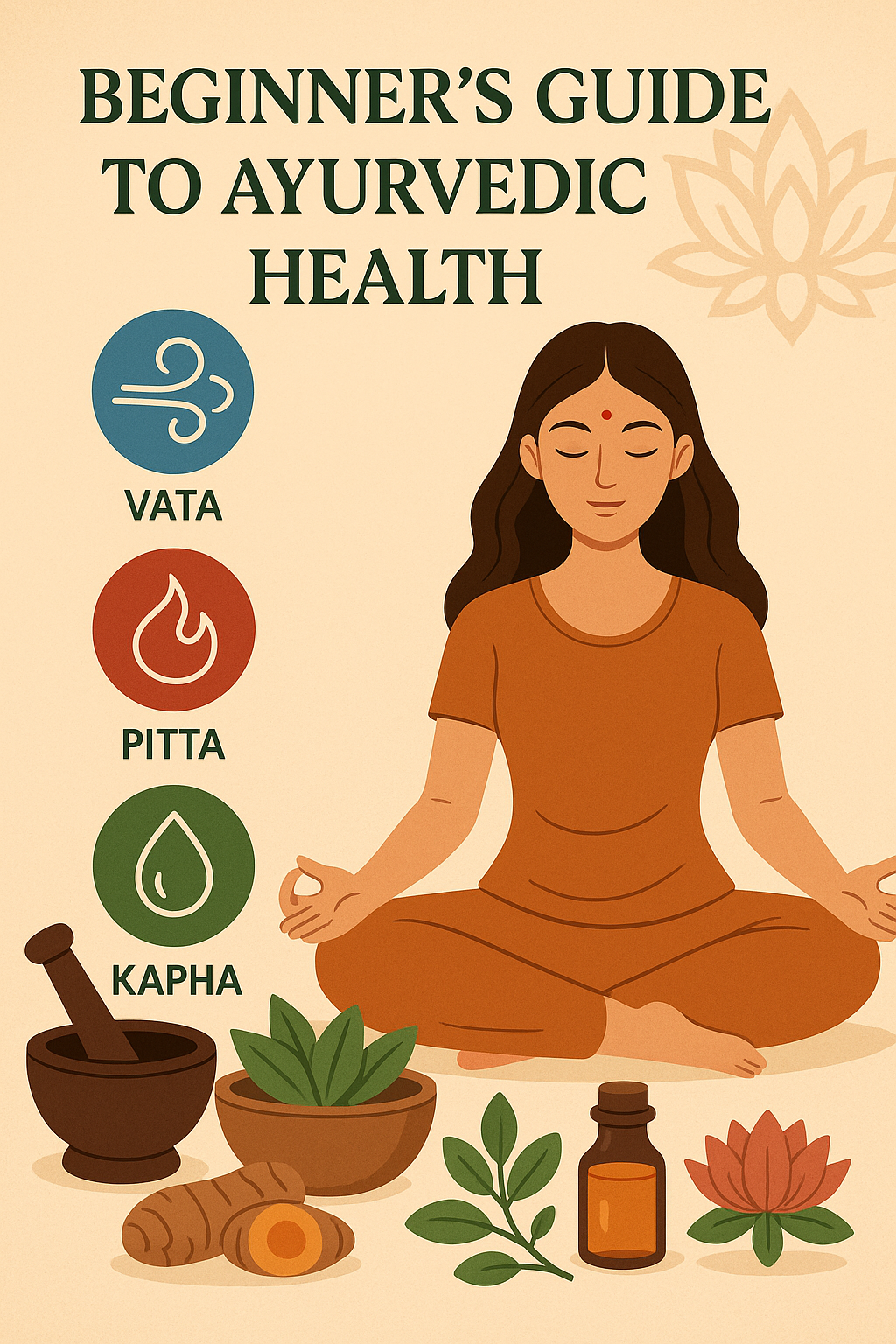
- The core principle revolves around three fundamental energies or doshas — Vata, Pitta, and Kapha — that govern all bodily functions.
- When these doshas are in balance, we experience good health.
🧬 Step 1: Identify Your Dosha
The first step is to understand which dosha predominates in your body:
- 🔹 Vata Dosha: If you often experience dry skin, sensitivity to cold, quick excitement, and irregular digestion.
- 🔸 Pitta Dosha: If you feel hot, easily irritated or angry, experience acidity, or have skin inflammation.
- 🟢 Kapha Dosha: If you tend to feel heavy, sluggish, prone to weight gain, or experience congestion and cold easily.
👉 Take an Ayurvedic Dosha Quiz online or consult an Ayurvedic practitioner to determine your dosha type.
🥗 Step 2: Start with Your Diet
Simple dietary changes can start your Ayurvedic journey right away.
🌿 For Vata:
- Eat warm, moist foods like khichdi (rice and lentils) and soups.
- Avoid dry, raw, or cold foods.
- Use warming spices like ginger and sesame oil.
🔥 For Pitta:
- Eat cooling, calming foods like cucumber raita and coconut water.
- Avoid spicy, sour, and oily foods.
- Use herbs like coriander and mint.
💧 For Kapha:
- Eat light, dry foods like steamed vegetables and mung dal.
- Avoid dairy, sweets, and heavy foods.
- Use warming spices like ginger, chili, and honey.
🧘♂️ Step 3: Follow a Daily Routine (Dinacharya)
Ayurveda emphasizes a balanced daily routine for lasting health:
✅ Brush your teeth, clean your tongue, and do an oil massage in the morning
✅ Eat and sleep at regular times
✅ Practice natural detox like exercise, yoga, or meditation
✅ Have a light dinner and sleep before 10 PM
🌸 Step 4: Use Simple Herbal Remedies
Start with easy-to-find Ayurvedic herbs:
- Triphala – aids digestion and detoxification
- Ashwagandha – reduces stress and boosts energy
- Tulsi (Holy Basil) – relieves cold and cough
- Turmeric – fights inflammation and supports immunity
💡 Step 5: Practice Meditation and Yoga for Mental Calm
- Meditate for 10-15 minutes daily
- Practice simple yoga like Surya Namaskar and Pranayama
- These help calm the mind and balance the doshas
🔔 Bonus Tips for Beginners:
- ❌ Avoid relying on expensive or processed Ayurvedic products; try homemade remedies
- 🌿 Introduce lifestyle changes gradually—don’t rush all at once
- 🧑⚕️ Consult a qualified Ayurvedic doctor, especially if you have chronic health issues
📌 Conclusion
An Ayurvedic lifestyle is not just about physical health; it’s a holistic philosophy for living in harmony with nature. If you want to live naturally and healthily, start with small steps today. Ayurvedic Health Path will be your companion on this journey toward balanced body, mind, and soul.
📢 Question for You:
Which dosha do you think you belong to? Share your thoughts in the comments below!