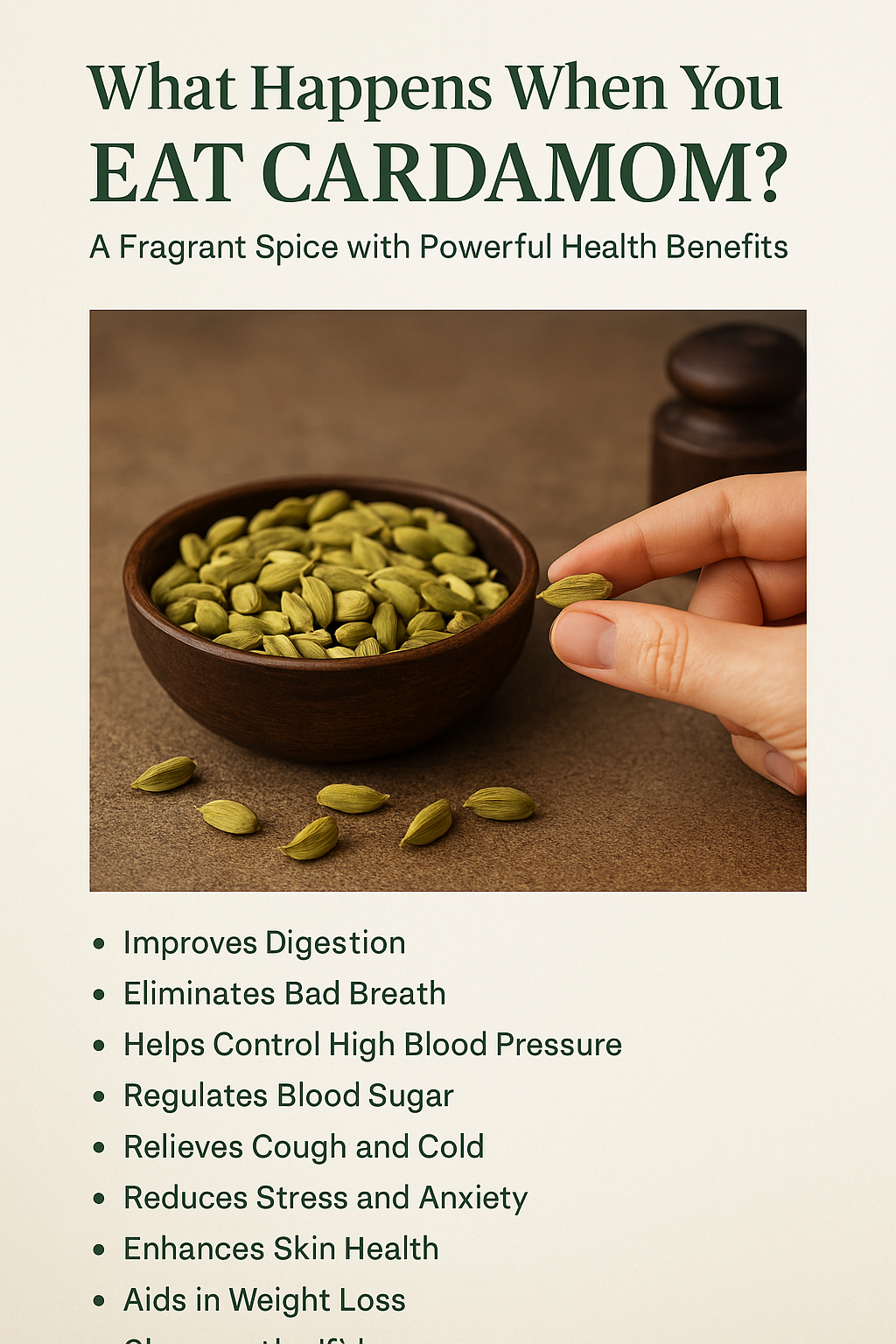
“What happens when you eat cardamom?” – a common question in many households. Cardamom is not just a spice used to add flavor and aroma to dishes; it is also a potent natural remedy that has been used for centuries in Ayurveda. This tiny pod contains numerous medicinal properties that benefit both the body and the mind.
In this blog, we’ll explore:
- What is cardamom?
- Its nutritional profile
- Health benefits of eating cardamom
- Diseases it helps prevent
- How to consume it for maximum benefits
- Precautions when using cardamom
What is Cardamom?
Cardamom, known as “Elaichi” in Hindi and Bengali, belongs to the Zingiberaceae (ginger) family. There are mainly two types:
- Green Cardamom – smaller and more aromatic, used in desserts and tea.
- Black Cardamom – larger with a smoky flavor, used in savory dishes like biryani and curries.
Nutritional Value of Cardamom
Despite its small size, cardamom is packed with nutrients, including:
- Iron
- Calcium
- Potassium
- Magnesium
- Vitamin C
- Vitamin B6
- Dietary fiber
- Antioxidants
These nutrients help boost immunity, improve digestion, and support overall health.
Top Health Benefits of Eating Cardamom
1. Improves Digestion
Cardamom enhances saliva secretion and promotes better digestion. It relieves gas, bloating, acidity, and nausea. Chewing a pod after meals can ease digestive discomfort.
2. Eliminates Bad Breath
Known as a natural mouth freshener, cardamom removes bad odor and keeps the mouth feeling fresh. Its antibacterial compounds kill oral germs.
3. Helps Control High Blood Pressure
Cardamom has diuretic and antioxidant effects that help reduce blood pressure. Regular intake relaxes blood vessels and improves circulation.
4. Regulates Blood Sugar
Cardamom may help manage diabetes by improving insulin sensitivity and balancing blood sugar levels, thanks to its antioxidant content.
5. Relieves Cough and Cold
It clears the respiratory tract and enhances lung function. Cardamom tea can ease cough, congestion, and breathing issues. It is also helpful for asthma patients.
6. Reduces Stress and Anxiety
Cardamom has natural antidepressant properties. It calms the nerves, improves mood, and promotes restful sleep when consumed regularly.
7. Enhances Skin Health
Its antibacterial and antioxidant properties help treat acne and skin infections. Cardamom purifies the blood, leading to a glowing and healthy complexion.
8. Good for Heart Health
Rich in potassium, magnesium, and fiber, cardamom supports heart health by lowering cholesterol and improving blood flow.
9. Aids in Weight Loss
Cardamom boosts metabolism and helps burn fat. Drinking cardamom-infused water or tea can support healthy weight management.
10. Cleanses the Kidneys
Cardamom acts as a natural detoxifier. It helps flush out toxins from the kidneys and supports proper urinary function.
How to Consume Cardamom for Best Results
- Chew 1–2 green cardamom pods on an empty stomach in the morning.
- Add cardamom to your tea for flavor and health benefits.
- Mix cardamom powder in warm milk before bed for better sleep.
- Use cardamom essential oil for aromatherapy and relaxation.
Precautions While Eating Cardamom
- Do not consume more than 2–3 pods a day.
- Pregnant or breastfeeding women should consult a doctor before regular use.
- Avoid if you have known allergies to cardamom.
Conclusion
Cardamom is more than just a fragrant spice; it’s a powerful natural healer. From improving digestion to reducing stress, supporting heart health to enhancing beauty—this tiny pod has enormous health benefits. Including cardamom in your daily diet in small amounts can make a big difference in your wellness journey.
Let nature’s gift work its magic – try cardamom today!
What’s Your Experience?
Share your thoughts or tips on using cardamom in the comments below!