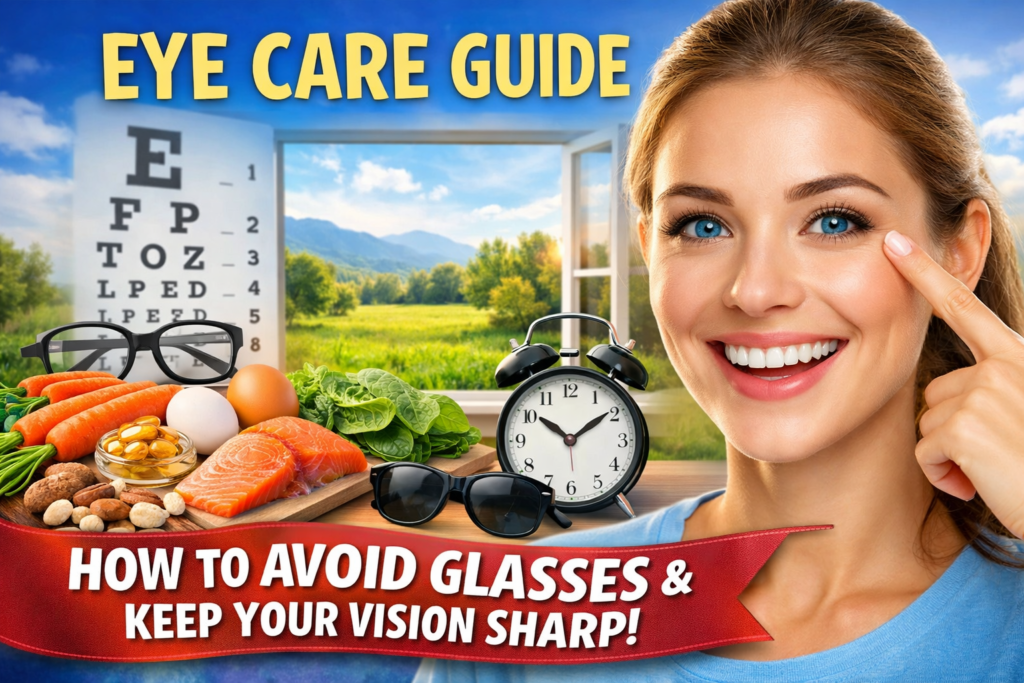
Eyes are one of the most precious organs of the human body. Through our eyes, we experience the beauty of the world. However, in today’s digital era, many people develop eye problems at a young age due to excessive use of smartphones, computers, poor diet, and unhealthy lifestyle habits.
As a result, wearing glasses has become very common, even among teenagers and children. But the good news is that by following some simple daily habits, you can protect your eyes, reduce the risk of needing glasses, and maintain good vision even in old age.
In this article, we will discuss:
- Habits that may help prevent the need for glasses
- Simple ways to keep your eyes healthy
- How to maintain strong eyesight even in old age
1. Habits That May Help You Avoid Glasses
In many cases, poor eyesight is linked to unhealthy daily habits. Improving your lifestyle can significantly help in maintaining good vision.
Limit Screen Time
One of the biggest causes of eye strain today is excessive screen time from mobile phones, computers, and televisions.
Looking at digital screens for long hours puts pressure on the eye muscles and can lead to blurred vision, headaches, and eye fatigue.
To reduce eye strain, follow the 20-20-20 rule:
- Every 20 minutes
- Look at something 20 feet away
- For at least 20 seconds
This simple habit relaxes the eye muscles and reduces strain.
Also remember:
- Keep screen brightness at a comfortable level
- Avoid using your phone too close to your eyes
- Reduce screen use before bedtime
Use Proper Lighting While Reading or Working
Reading or working in dim light can strain the eyes and may gradually affect vision.
Always ensure:
- Adequate lighting when reading or studying
- Avoid using phones or reading in the dark
- Keep the light source behind you rather than directly into your eyes
Good lighting helps your eyes work comfortably and reduces unnecessary strain.
Get Enough Sleep
Sleep plays a very important role in eye health.
Lack of sleep can cause:
- Dry eyes
- Redness
- Blurred vision
- Eye fatigue
Adults should aim for 7–8 hours of sleep every night. Rest allows the eyes to recover from daily stress and helps maintain clear vision.
Practice Simple Eye Exercises
Just like other muscles in the body, eye muscles also benefit from gentle exercises.
Simple eye exercises can improve flexibility and reduce fatigue.
Examples include:
- Closing your eyes for one minute to relax them
- Slowly moving your eyes left and right
- Focusing on a distant object for a few seconds
These exercises help strengthen eye muscles and improve focus.
Eat Foods That Support Eye Health
A healthy diet is essential for maintaining good vision.
Certain nutrients play a key role in eye health, including:
- Vitamin A
- Omega-3 fatty acids
- Lutein and Zeaxanthin
- Vitamin C and Vitamin E
Foods that are particularly beneficial for the eyes include:
- Carrots
- Spinach and leafy greens
- Tomatoes
- Eggs
- Almonds and nuts
- Fish (such as salmon or sardines)
- Papaya and mango
These foods support the retina, protect against eye damage, and help maintain strong vision.
2. Simple Ways to Keep Your Eyes Healthy
Apart from diet and lifestyle, some everyday habits can also help protect your eyesight.
Wash Your Eyes With Clean Water
Splashing clean, cool water on your eyes 2–3 times a day can help keep them refreshed and reduce irritation caused by dust or screen exposure.
Protect Your Eyes From Strong Sunlight
Prolonged exposure to harsh sunlight may damage the eyes over time.
When going outdoors, especially during midday sun, wearing UV-protective sunglasses can help protect your eyes.
Protect Eyes From Dust and Pollution
Dust, smoke, and pollution can irritate the eyes and sometimes lead to infections.
If you travel frequently or work outdoors, consider wearing protective glasses to shield your eyes from harmful particles.
Avoid Rubbing Your Eyes
Many people rub their eyes when they feel itchy or tired. However, rubbing the eyes can introduce bacteria and may damage delicate eye tissues.
If your eyes feel irritated, wash them with clean water instead.
Get Regular Eye Checkups
Regular eye examinations help detect problems early.
Even if you feel your vision is normal, it is a good idea to have an eye checkup every year, especially if you spend long hours using digital devices.
3. How to Maintain Strong Vision Even in Old Age
As we grow older, the risk of eye conditions naturally increases. However, healthy habits can significantly slow down vision decline.
Maintain a Nutrient-Rich Diet
A balanced diet rich in vitamins and antioxidants protects the eyes from age-related damage.
Nutrients especially important for aging eyes include:
- Vitamin A
- Vitamin C
- Vitamin E
- Omega-3 fatty acids
- Zinc
These nutrients support retinal health and reduce the risk of age-related eye problems.
Stay Physically Active
Regular physical activity improves blood circulation throughout the body, including the eyes.
Simple activities such as:
- Daily walking
- Light exercise
- Yoga
can help maintain overall eye health.
Control Blood Sugar and Blood Pressure
Conditions such as diabetes and high blood pressure can severely affect eyesight if not managed properly.
Keeping these conditions under control can reduce the risk of serious eye diseases later in life.
Schedule Routine Eye Exams
As you age, regular eye checkups become even more important.
Experts recommend having a complete eye examination at least once a year after the age of 40.
Early detection of problems can help preserve vision for many years.
Conclusion
Our eyes are one of the most valuable gifts we have, and protecting them should be a priority throughout life.
By maintaining a healthy lifestyle, limiting screen time, eating nutritious foods, getting enough sleep, and practicing simple eye care habits, it is possible to protect your vision and reduce the risk of needing glasses.
Taking care of your eyes today can help ensure clear and strong vision even in old age.
Eye Care Guide: How to Avoid Glasses and Maintain Strong Vision Even in Old Age
Eyes are one of the most precious organs of the human body. Through our eyes, we experience the beauty of the world. However, in today’s digital era, many people develop eye problems at a young age due to excessive use of smartphones, computers, poor diet, and unhealthy lifestyle habits.
As a result, wearing glasses has become very common, even among teenagers and children. But the good news is that by following some simple daily habits, you can protect your eyes, reduce the risk of needing glasses, and maintain good vision even in old age.
In this article, we will discuss:
- Habits that may help prevent the need for glasses
- Simple ways to keep your eyes healthy
- How to maintain strong eyesight even in old age
1. Habits That May Help You Avoid Glasses
In many cases, poor eyesight is linked to unhealthy daily habits. Improving your lifestyle can significantly help in maintaining good vision.
Limit Screen Time
One of the biggest causes of eye strain today is excessive screen time from mobile phones, computers, and televisions.
Looking at digital screens for long hours puts pressure on the eye muscles and can lead to blurred vision, headaches, and eye fatigue.
To reduce eye strain, follow the 20-20-20 rule:
- Every 20 minutes
- Look at something 20 feet away
- For at least 20 seconds
This simple habit relaxes the eye muscles and reduces strain.
Also remember:
- Keep screen brightness at a comfortable level
- Avoid using your phone too close to your eyes
- Reduce screen use before bedtime
Use Proper Lighting While Reading or Working
Reading or working in dim light can strain the eyes and may gradually affect vision.
Always ensure:
- Adequate lighting when reading or studying
- Avoid using phones or reading in the dark
- Keep the light source behind you rather than directly into your eyes
Good lighting helps your eyes work comfortably and reduces unnecessary strain.
Get Enough Sleep
Sleep plays a very important role in eye health.
Lack of sleep can cause:
- Dry eyes
- Redness
- Blurred vision
- Eye fatigue
Adults should aim for 7–8 hours of sleep every night. Rest allows the eyes to recover from daily stress and helps maintain clear vision.
Practice Simple Eye Exercises
Just like other muscles in the body, eye muscles also benefit from gentle exercises.
Simple eye exercises can improve flexibility and reduce fatigue.
Examples include:
- Closing your eyes for one minute to relax them
- Slowly moving your eyes left and right
- Focusing on a distant object for a few seconds
These exercises help strengthen eye muscles and improve focus.
Eat Foods That Support Eye Health
A healthy diet is essential for maintaining good vision.
Certain nutrients play a key role in eye health, including:
- Vitamin A
- Omega-3 fatty acids
- Lutein and Zeaxanthin
- Vitamin C and Vitamin E
Foods that are particularly beneficial for the eyes include:
- Carrots
- Spinach and leafy greens
- Tomatoes
- Eggs
- Almonds and nuts
- Fish (such as salmon or sardines)
- Papaya and mango
These foods support the retina, protect against eye damage, and help maintain strong vision.
2. Simple Ways to Keep Your Eyes Healthy
Apart from diet and lifestyle, some everyday habits can also help protect your eyesight.
Wash Your Eyes With Clean Water
Splashing clean, cool water on your eyes 2–3 times a day can help keep them refreshed and reduce irritation caused by dust or screen exposure.
Protect Your Eyes From Strong Sunlight
Prolonged exposure to harsh sunlight may damage the eyes over time.
When going outdoors, especially during midday sun, wearing UV-protective sunglasses can help protect your eyes.
Protect Eyes From Dust and Pollution
Dust, smoke, and pollution can irritate the eyes and sometimes lead to infections.
If you travel frequently or work outdoors, consider wearing protective glasses to shield your eyes from harmful particles.
Avoid Rubbing Your Eyes
Many people rub their eyes when they feel itchy or tired. However, rubbing the eyes can introduce bacteria and may damage delicate eye tissues.
If your eyes feel irritated, wash them with clean water instead.
Get Regular Eye Checkups
Regular eye examinations help detect problems early.
Even if you feel your vision is normal, it is a good idea to have an eye checkup every year, especially if you spend long hours using digital devices.
3. How to Maintain Strong Vision Even in Old Age
As we grow older, the risk of eye conditions naturally increases. However, healthy habits can significantly slow down vision decline.
Maintain a Nutrient-Rich Diet
A balanced diet rich in vitamins and antioxidants protects the eyes from age-related damage.
Nutrients especially important for aging eyes include:
- Vitamin A
- Vitamin C
- Vitamin E
- Omega-3 fatty acids
- Zinc
These nutrients support retinal health and reduce the risk of age-related eye problems.
Stay Physically Active
Regular physical activity improves blood circulation throughout the body, including the eyes.
Simple activities such as:
- Daily walking
- Light exercise
- Yoga
can help maintain overall eye health.
Control Blood Sugar and Blood Pressure
Conditions such as diabetes and high blood pressure can severely affect eyesight if not managed properly.
Keeping these conditions under control can reduce the risk of serious eye diseases later in life.
Schedule Routine Eye Exams
As you age, regular eye checkups become even more important.
Experts recommend having a complete eye examination at least once a year after the age of 40.
Early detection of problems can help preserve vision for many years.
Conclusion
Our eyes are one of the most valuable gifts we have, and protecting them should be a priority throughout life.
By maintaining a healthy lifestyle, limiting screen time, eating nutritious foods, getting enough sleep, and practicing simple eye care habits, it is possible to protect your vision and reduce the risk of needing glasses.
Taking care of your eyes today can help ensure clear and strong vision even in old age.