
Ayurveda, the ancient science of life and holistic healing from India, emphasizes not only curing diseases but also maintaining balance in body, mind, and spirit. One of its most powerful lifestyle recommendations is the concept of “Dinacharya” — the ideal daily routine.
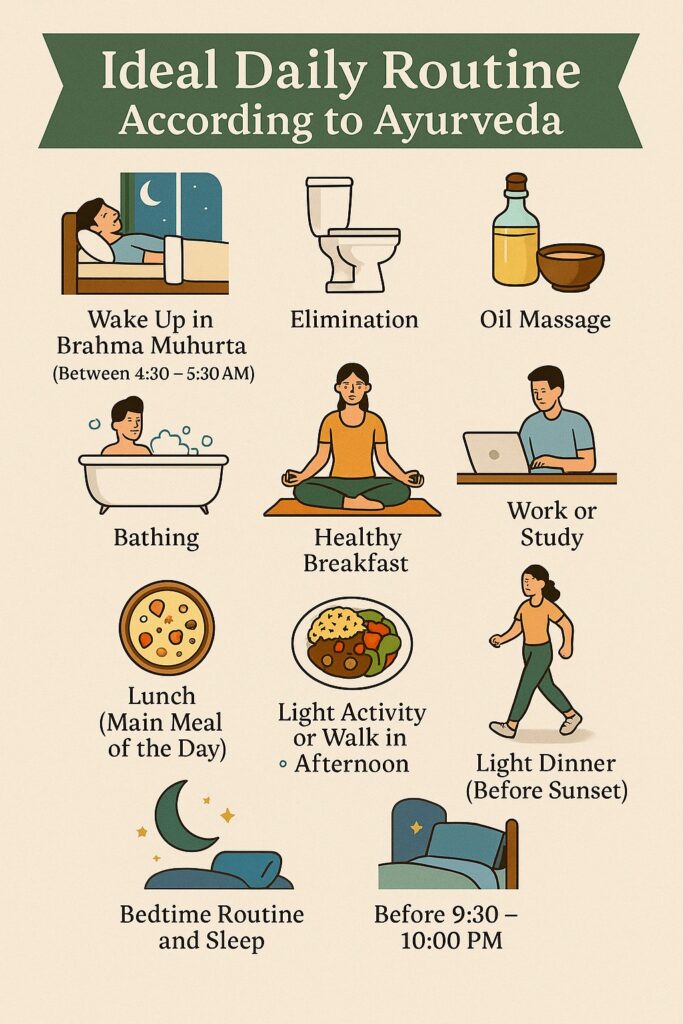
1. Wake Up in Brahma Muhurta (Between 4:30 – 5:30 AM)
This pre-dawn period is considered sacred and peaceful. Waking up during Brahma Muhurta helps calm the mind, improve memory, and foster spiritual awareness. It’s the best time for meditation, prayer, or self-reflection.
2. Elimination (Bowel & Bladder Cleansing)
Soon after waking, it’s important to evacuate the bowels and bladder. This clears toxins (Ama) from the body and supports healthy digestion.
3. Oil Massage (Abhyanga)
A warm oil massage using sesame or coconut oil stimulates blood circulation, nourishes the skin, strengthens the muscles, and calms the nervous system. It’s an act of self-care and healing.
4. Bathing
After oil massage, take a warm shower. It not only cleanses the body but also refreshes the senses and prepares you for the day ahead.
5. Yoga and Pranayama
Perform light yoga postures followed by breathing exercises (pranayama). These practices improve flexibility, detoxify the lungs, reduce stress, and bring clarity to the mind.
6. Healthy Breakfast
Eat a light, nutritious breakfast such as seasonal fruits, oatmeal, or warm porridge. It should energize you without feeling heavy.
7. Work or Study
Morning is considered the most productive time for intellectual or creative work. Concentration and mental sharpness peak during this phase.
8. Lunch (Main Meal of the Day)
Have your heaviest and most nourishing meal around noon when your digestive fire (Agni) is strongest. Include whole grains, fresh vegetables, and healthy fats.
9. Light Activity or Walk in the Afternoon
A short walk or light physical activity post-lunch helps digestion and prevents sluggishness.
10. Light Dinner (Before Sunset)
Dinner should be light and eaten at least 2–3 hours before bedtime. Opt for simple, warm, and easily digestible foods like soups or khichdi.
11. Bedtime Routine and Sleep
Before sleep, drink warm milk (if suitable), do light reading, meditation, or gratitude reflection. Try to go to bed by 9:30–10:00 PM to align with the body’s natural repair cycle.
Final Thoughts
Following an Ayurvedic daily routine cultivates harmony between your body and the environment. Over time, it can lead to greater energy, mental peace, and a stronger immune system.
Start small, be consistent, and observe how your life transforms with nature’s wisdom.