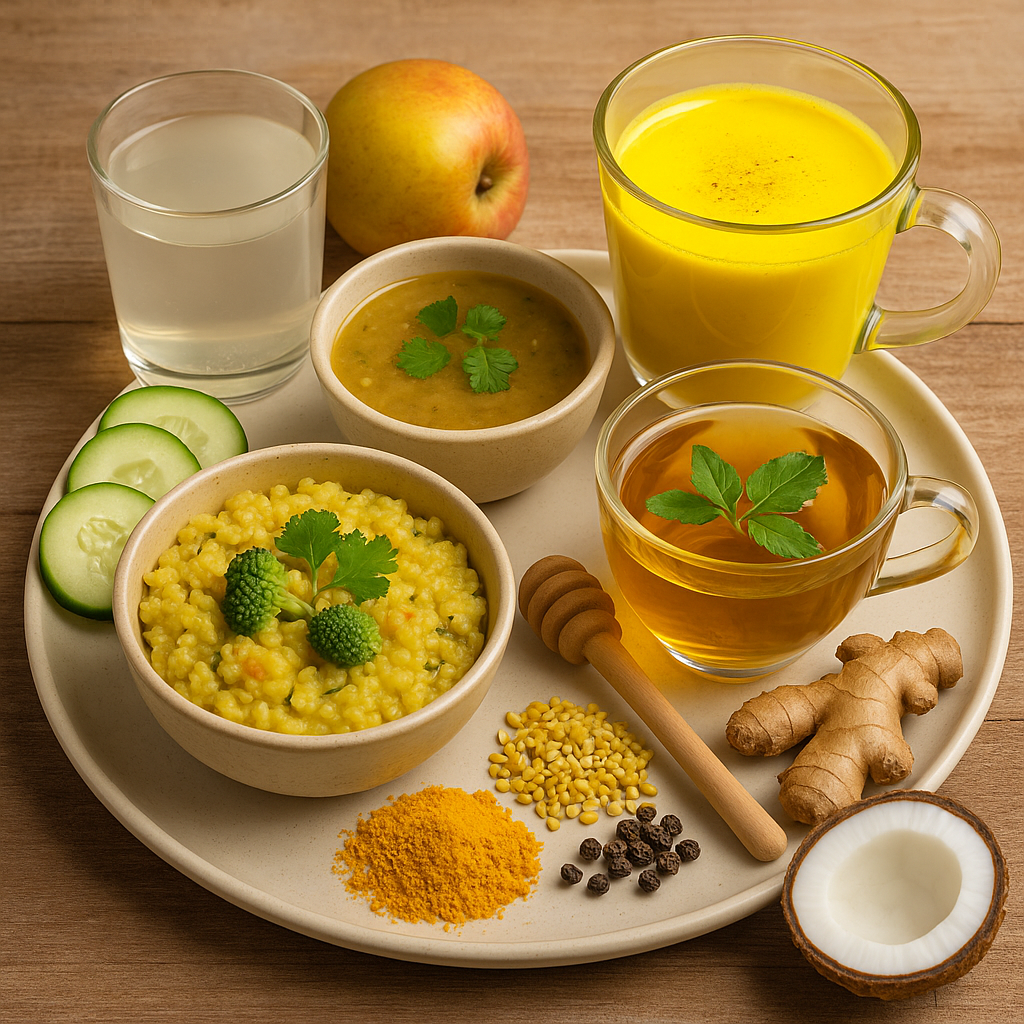
Ayurveda, the ancient Indian science of life, teaches us that “food is medicine”. If we eat the right foods at the right time and in the right way, we can maintain health, balance the body’s systems, and prevent nutritional deficiencies naturally.
In this article, you will learn:
- What to eat daily to meet your nutritional needs
- How and when to eat according to Ayurveda
- Nutrients found in different Ayurvedic foods
- Simple Ayurvedic recipe ideas
Daily Ayurvedic Diet Chart
6:00–7:00 AM (Brahma Muhurta – Early Morning):
- Warm water – Detoxifies the body
- Tulsi-Ginger Tea or Cumin Water – Boosts digestion and immunity
8:00 AM – Breakfast:
- Moong dal khichdi, or oats/poha
- Seasonal fruits – Mango, banana, apple, guava
- Coconut water – Hydrates and replenishes minerals
Nutrition: Carbohydrates, fiber, vitamins, minerals
1:00 PM – Lunch (Main Meal):
- Ghee rice or whole wheat roti
- Moong or masoor dal
- Seasonal vegetables – Bottle gourd, spinach, carrot, pointed gourd
- Raw salad – Cucumber, beetroot, carrot
- Paneer curry (fresh cheese)
Nutrition: Protein, vitamins A & B, calcium, iron
Ayurvedic Tip: Midday is when digestive fire (Agni) is strongest. Eat your heaviest meal at this time.
4:00 PM – Light Snacks:
- Fresh fruit or soaked almonds and raisins
- Triphala tea or Cinnamon-Ginger tea
Nutrition: Antioxidants, omega-3, iron
7:00 PM – Dinner (Lightest Meal):
- Light khichdi, vegetable soup, or roti with vegetables
- Warm water after meal – Helps digestion
Ayurvedic Tip:
- Avoid heavy meals after sunset
- Go to bed before 9:30 PM for proper digestion
What Nutrients You Get from Common Ayurvedic Foods
| Food Item | Nutrients | Benefits |
|---|---|---|
| Moong dal | Protein, fiber | Builds muscles, easy to digest |
| Ghee | Healthy fat | Improves digestion, nourishes skin |
| Ginger | Antioxidants | Reduces inflammation, aids digestion |
| Leafy vegetables | Vitamins A, C, Iron | Purifies blood, improves vision |
| Fruits | Natural sugar, fiber, Vitamin C | Boosts energy, strengthens immunity |
| Nuts & Raisins | Omega-3, iron, magnesium | Good for brain and bone health |
How to Eat – Ayurvedic Guidelines
- Chew your food thoroughly and eat slowly
- Be mindful – avoid TV or phone during meals
- Eat fresh, warm, and seasonal food
- Avoid frozen, processed, or cold foods
- Drink water 30 mins before or 1 hour after meals
Conclusion
By following a balanced Ayurvedic diet every day, your body gets the complete nutrition it needs—naturally. It’s not just about physical health, but also mental clarity and emotional balance.
“Ayurveda is not just a healing system—it is a way of life.”