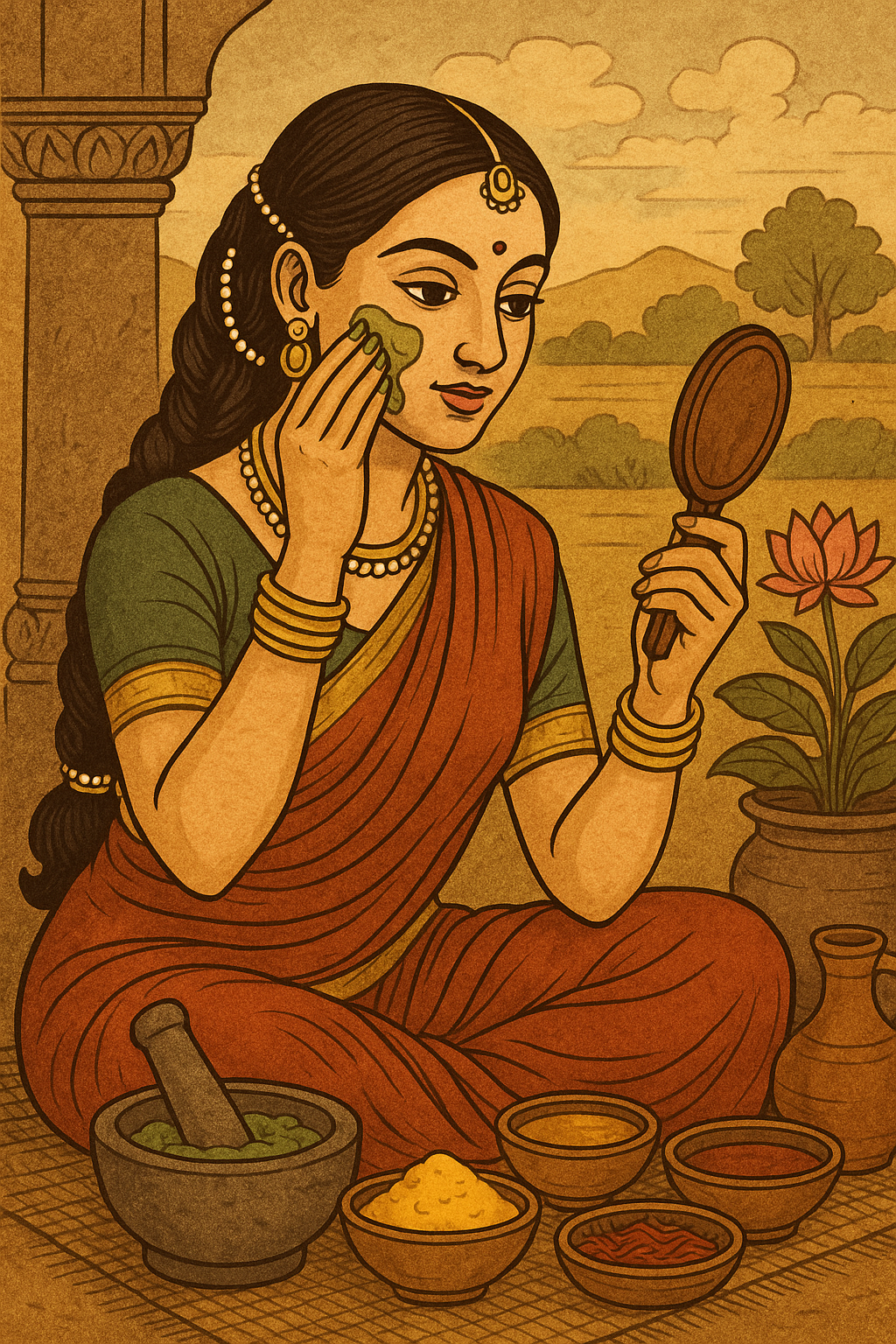
In an age dominated by synthetic cosmetics, ancient India embraced a more holistic, natural, and spiritual approach to beauty—rooted deeply in Ayurveda. The timeless beauty of mythological women like Goddess Lakshmi or Queen Draupadi wasn’t just poetic; it was the result of centuries-old natural self-care rituals backed by profound Ayurvedic wisdom. Let’s explore these ancient practices that nurtured glowing skin and everlasting charm.
1. Use of Aromatic Herbs and Sacred Flowers
In ancient India, skincare was intertwined with nature. Fragrant plants and sacred flowers like sandalwood, saffron, rose, bakul, lotus, and turmeric were commonly used to create natural face packs or “Ubtan.”
- Sandalwood & Saffron Paste: Known to cool, soften, and brighten the skin. Royal women used this regularly.
- Rose Water: Applied to refresh the skin and soothe the eyes, often used as a toner.
2. Seasonal Skincare (Ayurvedic Ritucharya)
According to Ayurveda, each season brings shifts in the body’s internal energies (Vata, Pitta, Kapha), directly affecting the skin. Ancient women followed seasonal beauty routines aligned with these changes.
- In Summer: Multani mitti (Fuller’s earth), cucumber juice, and sandalwood paste cooled and detoxified the skin.
- In Winter: Coconut oil, ghee, and honey were applied to maintain moisture and elasticity.
3. Beauty as a Spiritual Practice
True beauty in ancient India was not just about appearance but also about inner peace, purity, and balance.
- Morning Detox: Drinking warm water early in the morning was a daily ritual to cleanse the body and improve skin health.
- Yoga & Pranayama: Practices like Anulom-Vilom and Surya Namaskar enhanced oxygen flow, resulting in glowing skin.
4. Historical Beauty Rituals
- Queen Cleopatra (influenced by Ayurvedic principles) bathed in milk and honey—both are renowned in Ayurveda for softening and nourishing the skin.
- Royal “Ubtan” Ceremonies: Before weddings or festivals, brides applied a mix of turmeric, gram flour, sandalwood, and milk to achieve radiant skin.
5. Ancient Ayurvedic Texts on Beauty
Ayurvedic scriptures like the Bhagavata Purana, Charaka Samhita, and Ashtanga Hridaya contain references to skin diseases, their treatments, and methods for enhancing beauty.
- Kayachikitsa (internal medicine) and Rasayana (rejuvenation therapy) were two key branches focusing on overall well-being and beauty from within.
6. Time-Tested Ayurvedic Face Packs (You Can Try Today)
- For Glowing Skin:
Besan (gram flour) + turmeric + milk – apply 2 times a week. - For Acne:
Tulsi leaves + neem leaves + rose water – antibacterial and cooling. - For Smooth Skin:
Honey + lemon juice + sandalwood powder – natural exfoliant and brightener.
Conclusion
In ancient India, beauty was not merely skin-deep; it was a reflection of inner health, discipline, and connection with nature. These time-honored Ayurvedic practices nurtured not just the skin but the soul. As we return to our roots, these ancient rituals still hold the power to restore our skin’s natural glow—gently, effectively, and holistically.