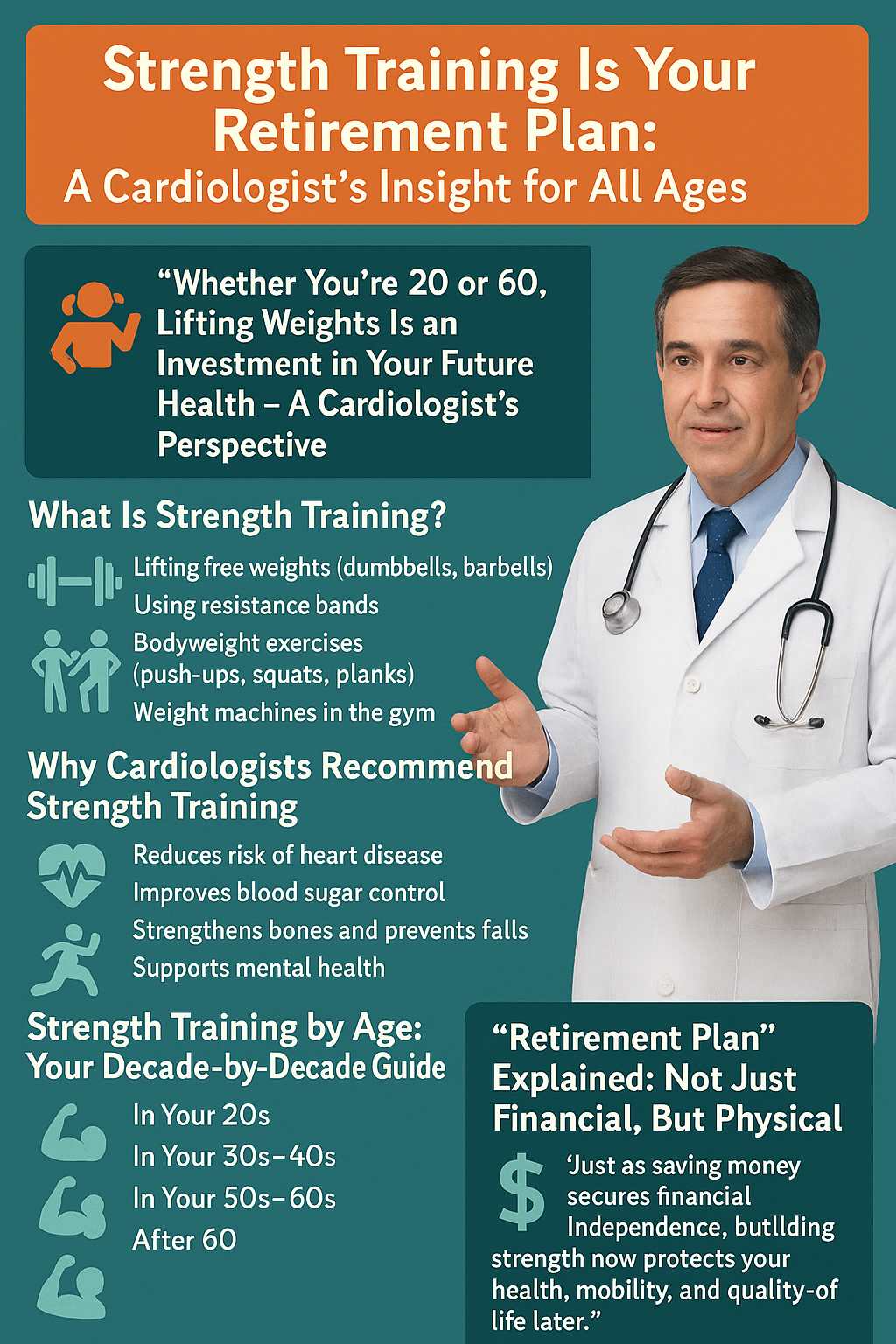
“Lifting weights isn’t just about muscles – it’s about freedom in old age.”
— Dr. Amanda Lewis, Cardiologist
Introduction: A New View of Retirement Planning
When most people think about retirement planning, their mind jumps to savings accounts, pension plans, and investment portfolios. But there’s another kind of investment you need to make to enjoy your golden years — and it doesn’t come from a bank. It comes from the gym, your living room, or even a park bench.
According to top cardiologists, strength training is not just a young person’s activity or a bodybuilder’s hobby — it’s a crucial health strategy for everyone, regardless of age. In fact, it might just be your most valuable retirement asset.
💡 What Is Strength Training?
Strength training, also known as resistance training, refers to any physical activity that makes your muscles work against a force. It can include:
- Weight lifting (barbells, dumbbells, kettlebells)
- Resistance bands
- Bodyweight exercises (push-ups, squats, planks)
- Machine-based resistance at the gym
- Functional exercises (carrying groceries, climbing stairs)
The goal is to increase muscular strength, endurance, and mass, which leads to a wide range of physiological and metabolic benefits.
🫀 Why Cardiologists Are Advocating Strength Training
In recent years, cardiovascular specialists have begun promoting strength training alongside traditional aerobic exercise. Here’s why:
1. Heart Health Enhancer
Though commonly associated with cardio exercises like running or cycling, heart health also benefits greatly from resistance training. Studies show that strength training:
- Lowers blood pressure
- Improves circulation and arterial function
- Reduces LDL (bad) cholesterol and increases HDL (good) cholesterol
- Decreases systemic inflammation
These factors significantly lower the risk of heart attacks, strokes, and cardiovascular disease.
2. Blood Sugar Regulation
Diabetes is a major concern as we age. Strength training helps prevent or manage Type 2 Diabetes by:
- Enhancing insulin sensitivity
- Increasing muscle glucose uptake
- Lowering fasting blood glucose levels
Since muscles are storage sites for glucose, building more muscle improves how your body processes sugars.
3. Protects Bones and Prevents Falls
Osteoporosis and fractures become more common with age, especially among women. Strength training helps:
- Increase bone density
- Strengthen joints and ligaments
- Improve balance and coordination, reducing fall risk
4. Mental Health & Cognitive Function
Lifting weights has a powerful impact on brain chemistry:
- Releases endorphins that combat depression
- Reduces symptoms of anxiety
- Improves memory, focus, and cognitive speed
For older adults, strength training may help prevent or delay dementia and Alzheimer’s disease.
5. Fights Muscle Loss (Sarcopenia)
Starting around age 30, people lose 3–8% of their muscle mass per decade. By age 60, this can severely affect independence.
Strength training slows and reverses this loss, enabling you to:
- Carry groceries
- Get up from chairs
- Climb stairs
- Stay mobile and independent longer
🧓 Strength Training as a Retirement Plan: What It Means
Cardiologists aren’t talking metaphorically when they say strength training is your retirement plan. Here’s the practical meaning:
| Traditional Retirement Plan | Strength Training |
|---|---|
| Financial security | Physical independence |
| Money savings | Muscle savings |
| Long-term planning | Long-term health |
| Portfolio management | Body management |
Retirement should not mean suffering from immobility, chronic pain, or constant hospital visits. Strength training gives you the physical resilience to live those years with dignity and vitality.
📈 Real-Life Health Benefits Backed by Science
A large-scale meta-analysis (British Journal of Sports Medicine, 2022) found:
- Just 30–60 minutes of strength training per week reduced all-cause mortality by 23%
- Reduced risk of cancer by 14%, and heart disease by 17%
- When combined with aerobic activity, benefits increased even further
Another study (JAMA, 2016) on people aged 65+ found that resistance training significantly improved survival rates over 15 years.
🕰️ Strength Training Through the Decades
👶 20s: Build Foundation
- Maximize bone density
- Develop muscular endurance
- Build lifelong fitness habits
👩💼 30s–40s: Prevent Decline
- Maintain metabolism
- Counteract sedentary lifestyle
- Manage stress and hormone changes
👴 50s–60s: Defend Against Aging
- Fight muscle and bone loss
- Prevent cardiovascular disease
- Maintain flexibility and joint health
🧓 70s and Beyond: Preserve Freedom
- Stay mobile and independent
- Reduce fall risk
- Improve balance and mental alertness
💪 Beginner’s Strength Plan for Any Age
You don’t need a gym or expensive equipment. Here’s a simple weekly plan for beginners:
3-Day Strength Routine:
Day 1 – Full Body (Bodyweight Focus)
- Squats – 3 sets of 10
- Wall Push-ups – 3 sets of 10
- Glute bridges – 3 sets of 12
- Plank – 30 seconds x 2
Day 2 – Resistance Bands or Dumbbells
- Bicep curls – 3 sets of 12
- Shoulder press – 3 sets of 10
- Bent-over rows – 3 sets of 12
- Standing calf raises – 3 sets of 15
Day 3 – Core & Balance
- Bird dogs – 3 sets of 10
- Side planks – 30 seconds each side
- Chair step-ups – 3 sets of 8 each leg
- Seated leg lifts – 3 sets of 10
🧠 Tips for Staying Safe and Consistent
- Warm up before and cool down after workouts
- Start slow — light resistance, perfect form
- Increase gradually
- Rest between sessions for recovery
- If over 50 or with a health condition, consult a doctor
🥦 Combine with a Heart-Healthy Diet
Nutrition complements strength training. Focus on:
- Protein-rich foods (lentils, chicken, eggs, tofu)
- Omega-3 fats (walnuts, flaxseed, fish)
- Colorful vegetables and whole grains
- Limit processed sugars, salt, and trans fats
Stay hydrated, and consider supplements if needed (like Vitamin D, magnesium, and calcium for bones).
🧘 Bonus: Add Flexibility & Mind-Body Practices
A holistic health routine includes:
- Stretching or yoga for joint mobility
- Breathing exercises or meditation for stress
- Walking or cycling for cardiovascular health
📣 Final Thoughts: Strength Is Freedom
You work your whole life to retire with financial security. But without physical health, that retirement may be spent in hospitals, wheelchairs, or isolated at home.
Strength training ensures your body is as ready for retirement as your bank account.
Whether you’re a college student or a retired grandparent — it’s never too early or too late to start. The earlier you invest, the more you’ll gain.
🏁 The Takeaway
- Strength training is essential for heart health, longevity, and independence
- It’s your best defense against age-related decline
- Start small, stay consistent — results come with time
- Consider it your physical 401(k) — grow your health capital today
“You’ll never regret lifting. But you may regret not starting sooner.”
– Dr. Lewis, Cardiologist